




In this blog post, we want to share a side of BDRC that few see: our history of repatriating physical books; the paper, ink, and generations of craftsmanship that form the foundation of our work.
While we are best known for our digital archive, this is the story of how we have honored our founder's vision by returning these physical hard copies to the communities that created them. This story complements our ongoing mission to provide free digital access to the world, showing how the physical and digital legacies of E. Gene Smith (1936–2010) work hand-in-hand.
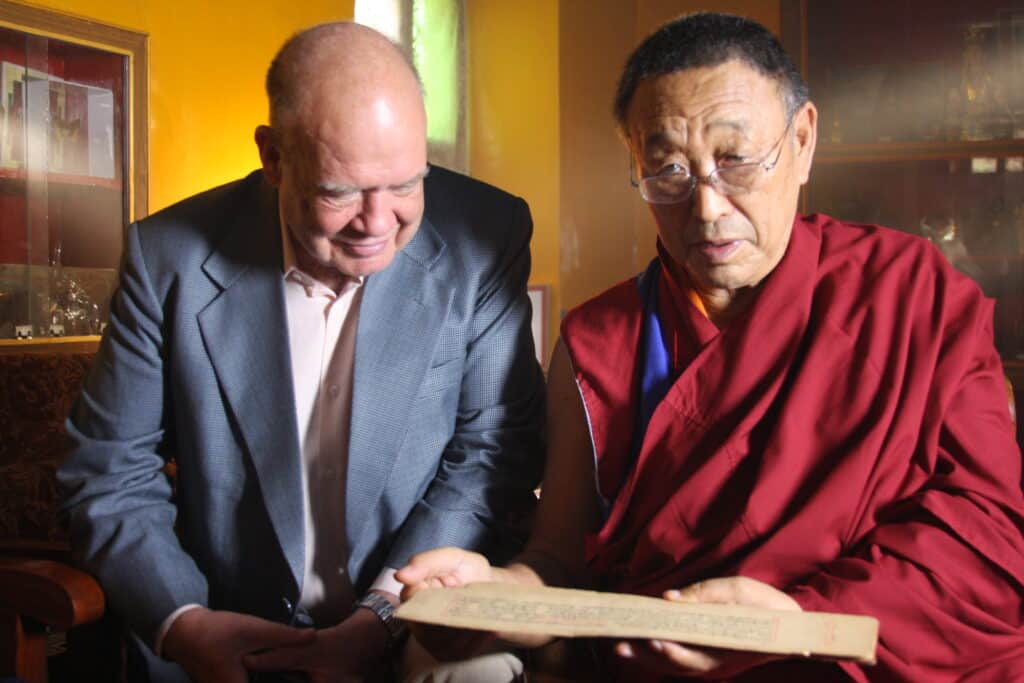
Gene Smith and H.H. the 33rd Menri Trizin, long time partners in text preservation © Lunchbox Communications
The Partnership of Print: 1965–1987
Gene Smith is often remembered as a legendary collector, but his work was actually a deep, collaborative partnership with the Tibetan and Himalayan diaspora. During his decades in India, Gene helped curate and distribute over 6,000 volumes of Tibetan writings through the PL480 program. Many thousands more were published by Tibetans alone.
Gene's personal collection of Tibetan books was composed of most Tibetan language books published in South Asia between the 1960s and 1990s. Along the way, he also collected several hundred traditional Tibetan texts, many of which he reprinted. Gene was famously generous: he could point a scholar to the exact page of an obscure text in his collection, and then freely lend that rare book out on the spot.
Preservation and Repatriation
When scanners and databases emerged in the 1990s, Gene saw a new frontier. He volunteered his entire personal library to be the "seed" for what would become the Tibetan Buddhist Resource Center (TBRC).
His goal was clear: Digitize for global preservation; repatriate for local heritage. Gene never wanted to be a permanent gatekeeper. He viewed himself as a temporary steward. In his 2006 will, he codified this by bequeathing his entire collection of Tibetan books to the renowned scholar Alak Zenkar Rinpoche, intended for eventual return to Tibetans in Asia.
A Consistent Practice of Return
Since Gene's passing in 2010, BDRC has worked meticulously to place these physical volumes in centers where they can live as active resources. We have focused on three distinct areas:
-
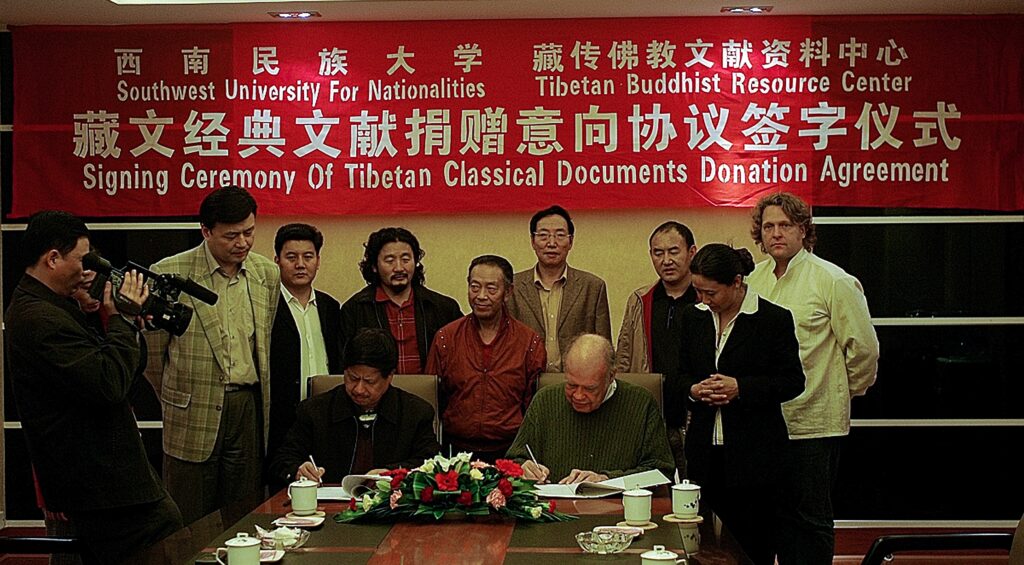
- Academic Repatriation (2012): We shipped approximately 6,000 volumes to the Southwest University for Nationalities (SWUN) in Chengdu. At the time, SWUN was a thriving hub for Tibetan higher education, and the Gene Smith Library was established there to return the bulk of his collection to a Tibetan academic setting.
-
- Monastic Stewardship (2017): We donated 195 boxes—including traditional texts and the prestigious Pedurma edition of the Kangyur and Tengyur—to a Buddhist monastery in Canada, to support monastic study and translation.
-
- Community Education (2025): As BDRC transitioned to a fully remote organization, we donated 142 boxes of commercially published Tibetan books to a prominent Tibetan lama for a future community library.
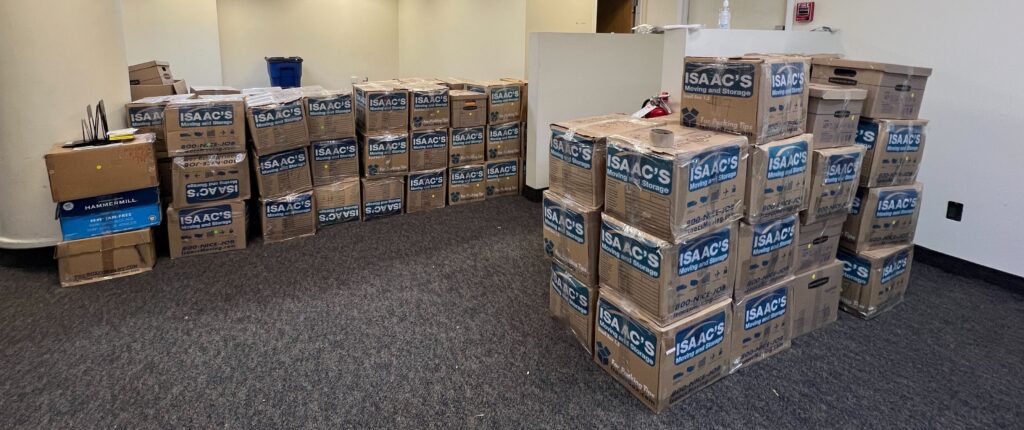
Some of the 142 boxes of Tibetans books from BDRC's office donated in October to a lama for his community library
The Final Fulfillment
In late 2024, the representatives of Alak Zenkar Rinpoche requested the return of the final 150 traditional pechas (long-leaf loose-leaf texts) still residing in the BDRC offices. Before the handover, we prioritized the digitization of any remaining pages so that their wisdom would be preserved in our digital library forever.
With the return of the final three volumes in December 2025, BDRC is no longer in possession of any paper-and-ink Tibetan books from Gene Smith's estate. The circle is complete.
Looking Ahead: A Digital-First Future
By returning these physical treasures to the leaders and institutions where they will be used, BDRC reaffirms its mission as an ecumenical, international resource. Our digital library now serves as a bridge for the diverse heritage of Tibet, Bhutan, Mongolia, and the broader Himalayan region.
The books have found their homes in libraries and monasteries; their digitized contents, however, now belong to the entire world.
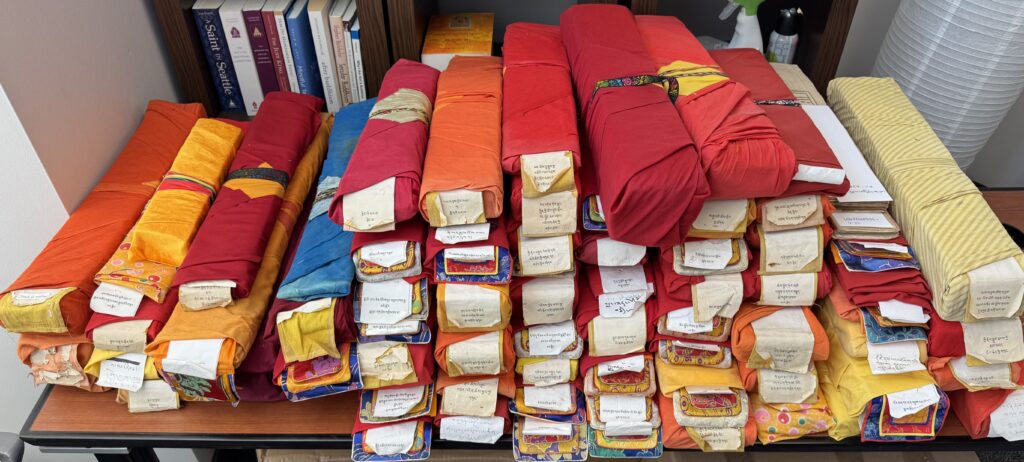
A couple dozen of the last remaining traditional Tibetan texts from Gene's personal collection that were given to Alak Zenkar Rinpoche in 2025 in fulfillment of Gene's will and testament
Sorry, the comment form is closed at this time.